Building A Bold Digital Futures for Rachelle Cox
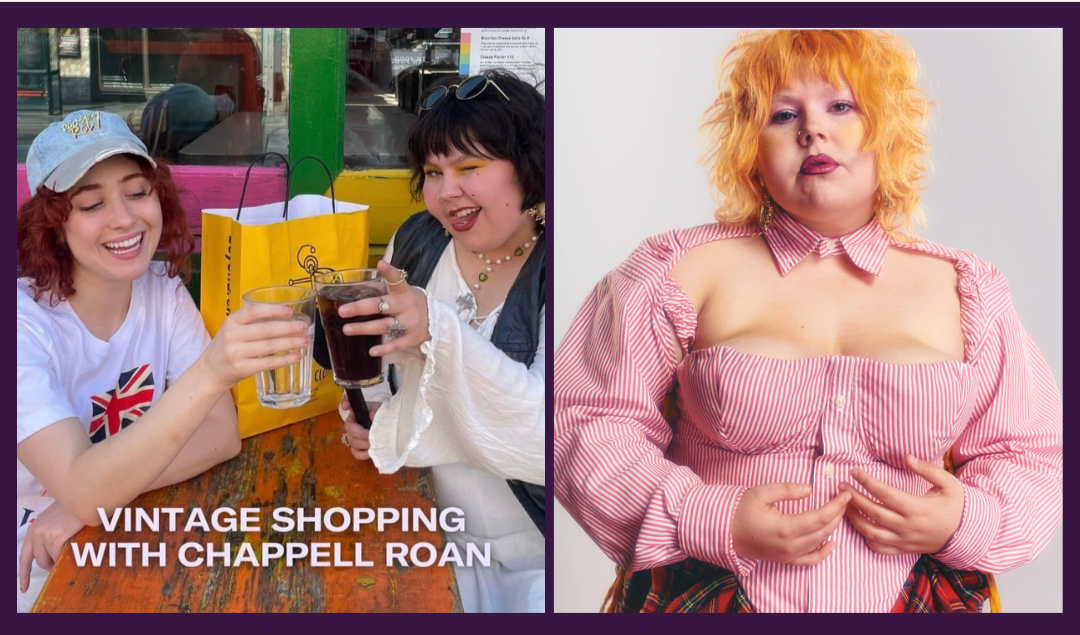
One of the best parts of running Pansy Studios is getting to work with other neurodivergent creatives who just get it. This case study is about my work with Rachelle Cox - a video journalist, actor, model and presenter whose career is as expansive and radical as they are.
The Starting Point: Too Much Work, No Website
Rachelle’s CV is the sort most people would dream of. Their work has been in Vogue Italia, BRICKS, i-D, and they’ve modelled for brands like Lazy Oaf and 3INA. They’ve interviewed icons like Chappell Roan. They’re everywhere - and yet, they didn’t have a website and crucially they needed one.
That’s something many of us recognise: you’re creating incredible work, but when people ask “Where can I see it?” you don’t have a simple answer.
For Rachelle, that lack of a centralised presence online meant:
their presence didn’t reflect the full scope of what they do,
it was harder for clients and brands to reach out,
and opportunities slipped by - not for lack of talent, but because the infrastructure wasn’t there.
And the thought of starting? Overwhelming.
The Process: Building Around How We Work
I knew from the start this couldn’t be about shoving their work into a generic template - the site needed to feel like them, but it also needed to be sustainable.
We built slowly and clearly:
Structure first. We mapped out their key areas - acting, modelling, writing, presenting, so everything had a home.
Design second. We chose bold, unapologetic visuals that matched their queer, DIY energy. No beige minimalism here.
Copy third. Together we shaped language that was confident and accessible, something Rachelle could feel proud of.
Sustainability last. The backend is simple enough that they can add new work without it becoming another overwhelming task.
Because we’re both neurodivergent, the workflow mattered as much as the outcome. I didn’t throw endless to-do lists at them; we worked in small, manageable steps. If something felt too heavy, we adjusted. Progress was steady and visible.
The Collaboration: Neurodivergence as a Shared Language
There was an ease to the collaboration because we didn’t have to explain away how our brains worked. Deadlines were realistic, not punishing. Energy dips were accounted for. The way we communicated didn’t require translation.
That’s rare in creative industries, where the expectation is often to perform productivity at all costs. Instead, we built a rhythm that respected both of us.
As Rachelle put it:
“Working with Pansy Studios has changed my life in all the best ways. Ellen’s knowledge and understanding of accessibility makes for the most efficient, inclusive and outstanding collaborative experience.”
The finished site finally reflects the scope of what Rachelle does. It’s clear, bold, and easy for clients to navigate. They have a digital home that can grow with them, instead of holding them back.
But the bigger shift is confidence. What once felt unmanageable is now in place. Their creativity isn’t limited by admin. The overwhelm has turned into opportunity.
What Members Can Take From This
If you see yourself in Rachelle’s story, know this: you don’t need to change who you are to build something sustainable. The problem isn’t you - it’s the systems that were never designed for us in the first place.
Being neurodivergent means we might work differently, but it also means we see connections, possibilities and creative routes others don’t. When we collaborate with people who understand that, the results are powerful.
That’s what we’re building together at Pansy Studios: not just strategies and websites, but systems that let us thrive as our whole selves.